
From Material Analysis to Process Development: Building AOJIA’s Manufacturing Capabilities
Material verification, production tooling and batch inspection are practical foundations of fastener manufacturing. AOJIA’s laboratory photographs and historical patent records offer a closer look at these capabilities.
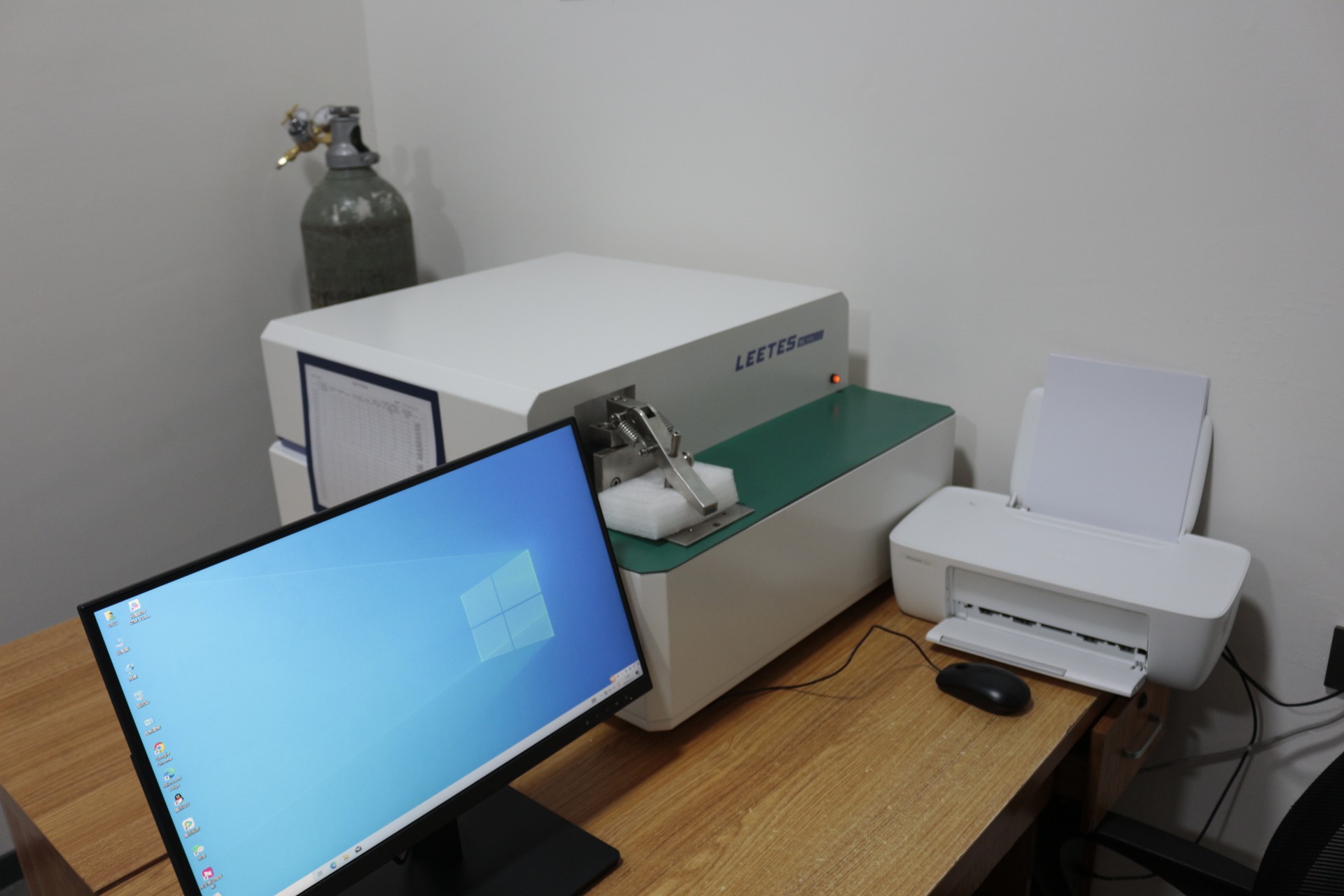
Actual photograph of LEETES spectrometric analysis equipment in AOJIA’s inspection workshop.
As material and logistics costs fluctuate, fastener buyers face a practical question: can a supplier consistently deliver products that meet the agreed requirements? Material conformity, dimensional consistency and documented inspection all influence long-term cooperation. Photographs of AOJIA’s inspection workshop and records of its process equipment provide a concrete starting point for evaluating these foundations.
Material verification supported by evidence
AOJIA’s inspection workshop is equipped with LEETES spectrometric analysis equipment. Spectrometric testing provides information about a metal’s elemental composition, helping to check material grades against purchasing requirements. The photograph in this article shows AOJIA’s existing laboratory equipment and workbench.
For stainless steel fasteners and anchors, material checks should connect with supplier material documents, batch identification and the applicable inspection requirements. Composition is one part of material conformity; finished-product dimensions, mechanical properties and application requirements need separate verification.
Process development rooted in manufacturing tasks
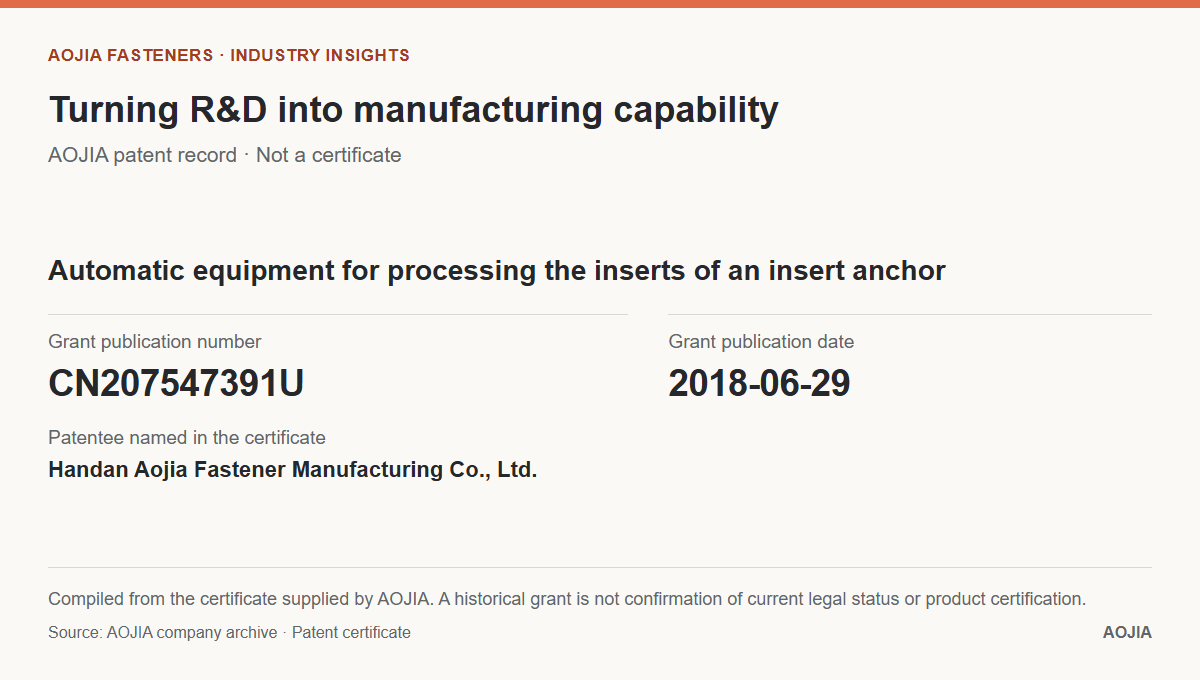
A certificate held in AOJIA’s company records documents the grant of a utility model patent to Handan Aojia Fastener Manufacturing Co., Ltd. on 29 June 2018. Its Chinese title is “一种插片壁虎的插片自动加工设备” — automatic equipment for processing anchor inserts. The publication number is CN207547391U, the patent number is ZL201721753555.9, and the inventor recorded on the certificate is Li Xiong.
This historical record indicates AOJIA’s interest in developing equipment for insert processing. For a manufacturer, improvements to feeding, positioning, forming and tooling can connect product design with practical production. A patent grant and a product inspection report serve different purposes; neither replaces the other.
Carry inspection requirements from samples into production
Equipment investment delivers value through everyday processes. For custom fasteners, a practical approach is to agree the drawing revision, critical dimensions and acceptance methods during sampling, then organize production and inspection against those confirmed requirements.
After changes to dies or fixtures, relevant dimensions and assembly behavior should be checked again. If batches differ, material, production and inspection records should support investigation. Connecting these steps helps manage variation across repeat orders.
Turn technical discussions into clear delivery requirements
Overseas wholesalers, brands and project buyers can focus supplier assessment on documents and samples that can be checked: specify the intended application, material and surface requirements, agree sampling and acceptance conditions, and verify labels, quantities and packaging before shipment.
AOJIA can discuss stainless steel fasteners, anchors and custom manufacturing requirements. With a drawing, sample or purchasing list, both parties can clarify manufacturing requirements and inspection scope, giving development, production and delivery a common set of instructions.