
Freight Cost Volatility: Planning Fastener Exports More Clearly
Carrier notices provide a basis for reviewing surcharges, booking terms, loading plans and pre-shipment checks in fastener exports.
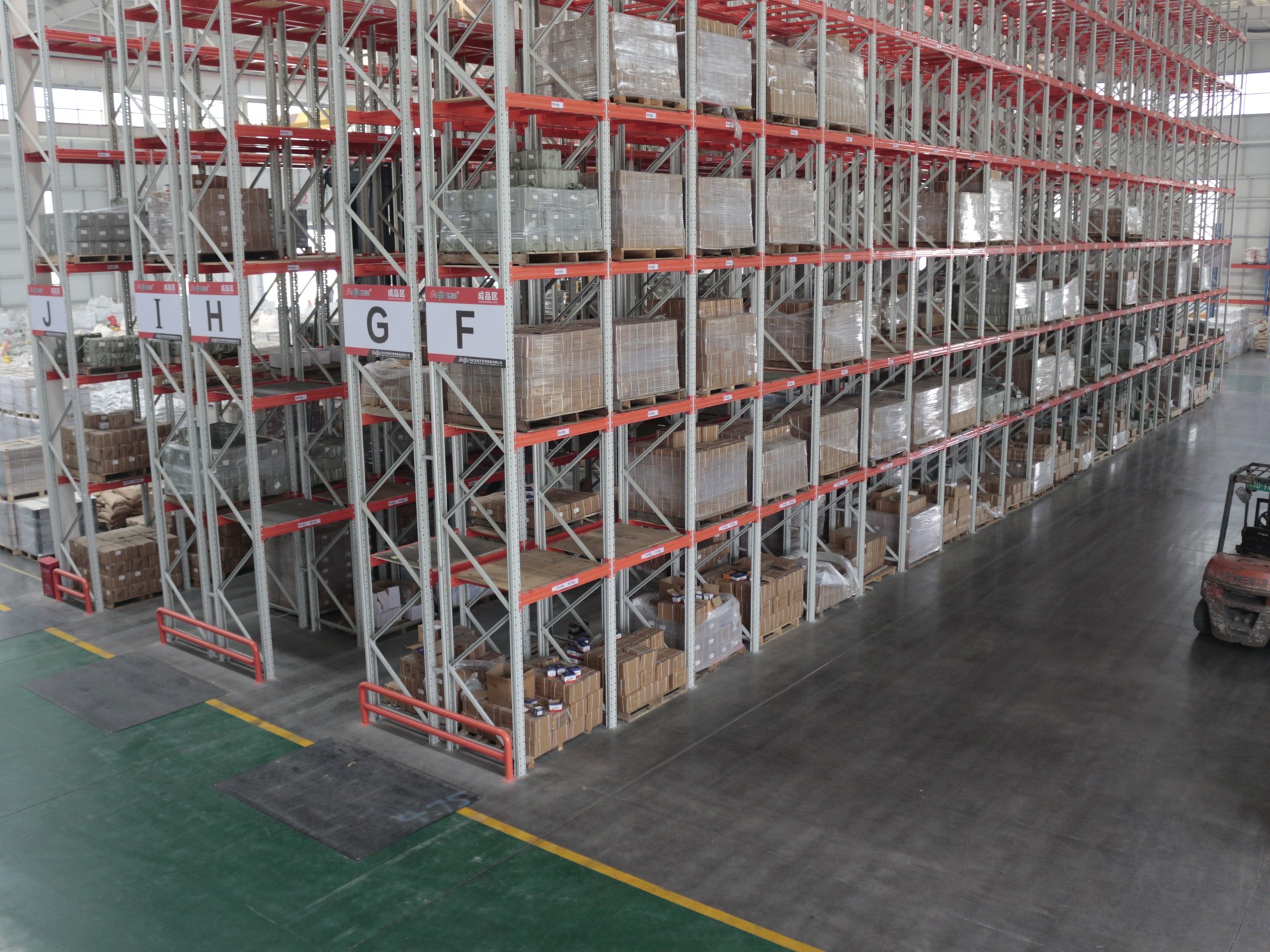
Inside AOJIA’s warehouse | Preparing fasteners for export
Ocean freight affects more than a transport bill: it also influences order quotations, delivery planning and customer expectations. Maersk has issued Middle East service and Strait of Hormuz operational updates throughout 2026. For fastener suppliers and buyers, the practical response is to confirm charges, loading conditions and shipment readiness item by item.
Separate surcharges from the full freight quotation
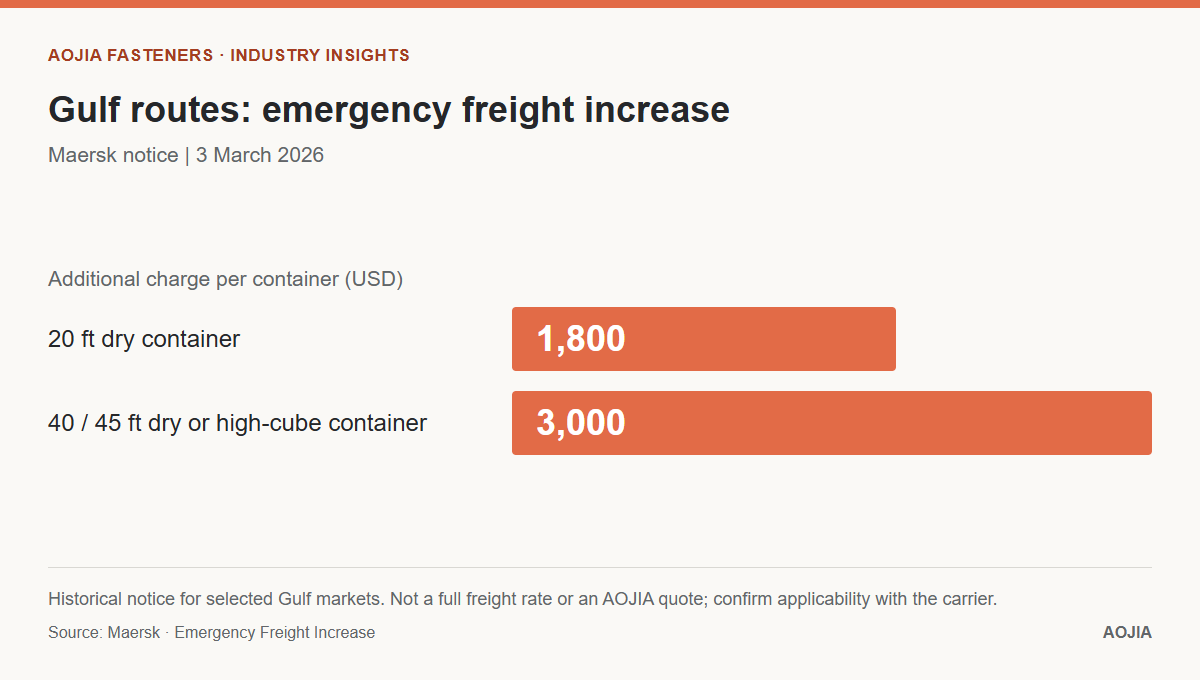
Maersk’s 3 March 2026 Gulf notice added US$1,800 per 20-foot dry container and US$3,000 per 40/45-foot dry/high-cube container. These are emergency increases, not total freight rates.
The example shows why comparing logistics options requires more than a base rate. At booking, confirm the trade lane, equipment, departure date, surcharges and quotation validity against the carrier’s latest confirmed offer. Amounts for different ports and contract terms should not be treated as directly comparable or as an industry-wide percentage increase.
Communicate early without assuming a rate is locked
Once production timing is clear, discuss available sailings, cut-off dates, estimated arrival and rebooking conditions with the forwarder. An enquiry two or three weeks ahead may be a starting point, but space commitments, rate protection and applicable charges must be established in specific terms.
Quotations should distinguish factory delivery terms from destination costs and identify who arranges booking, insurance, customs clearance and inland transport. Clear responsibilities help manage expectations more effectively than an arrival promise without stated conditions.
Assess consolidation by weight, packaging and deadlines
Metal fastener shipments require careful weight checks; unused container space alone is not a sufficient basis for a loading plan. Suppliers, customers and logistics partners should assess consolidation together, considering payload limits, packaging compatibility, destinations and deadlines. Filling a container should not delay an urgent order.
- Confirm carton counts, pallet dimensions, gross weights and packing lists in advance.
- Agree on product separation, handling methods and delivery priorities before combining shipments.
- Compare total charges and estimated transit times, not just a single freight line item.
- Record shipment changes and promptly confirm extra costs and timing implications with the customer.
Complete shipment preparation before loading
Before dispatch, check product references, quantities, packaging marks and agreed quality documents against the order. Commercial invoices, packing lists and the physical cargo should be consistent. Resolving shortages, incorrect labels or document discrepancies before departure can reduce corrective work after goods leave the factory.
When enquiring about AOJIA tie-wire anchors, stainless steel wedge anchors or custom products, include the destination port, quantity, target delivery date and packaging requirements to support production and shipping discussions.