
Yongnian Fastener Cluster Reaches RMB 29.93 Billion in First-Half Output as Shared Manufacturing Advances
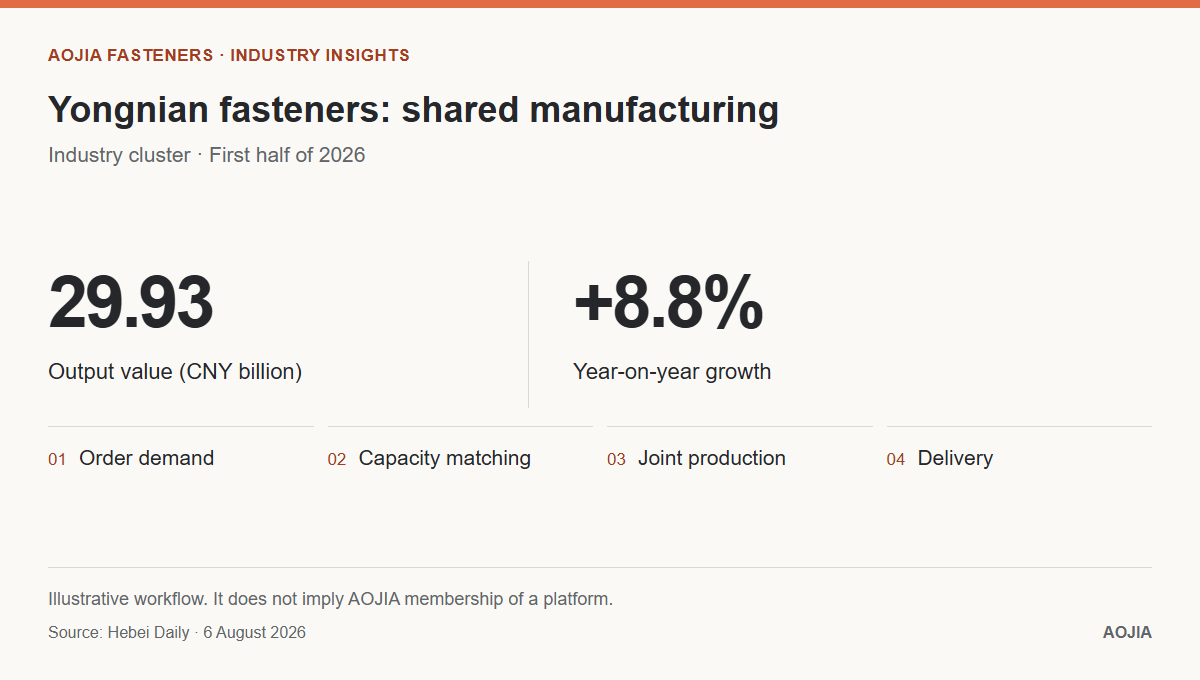
Yongnian’s fastener cluster recorded RMB 29.93 billion in output in the first half of 2026, up 8.8% year on year. Production coordination and quality management offer two useful perspectives on its development.
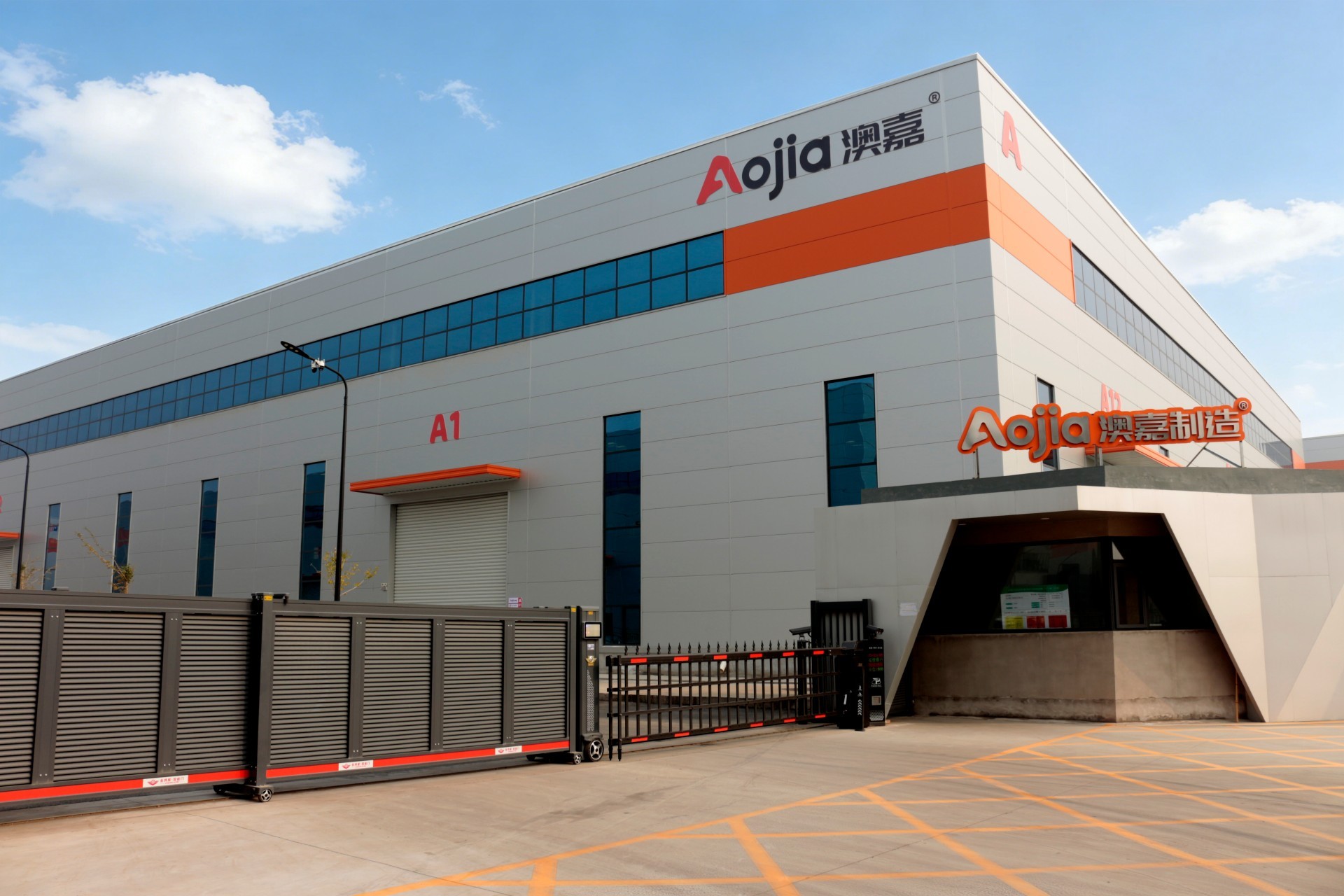
AOJIA factory exterior | Fastener manufacturing in Yongnian
Hebei Daily reported on 6 August 2026 that Yongnian’s fastener cluster achieved output of RMB 29.93 billion in the first half of the year, an increase of 8.8% year on year. Beyond that growth, shared manufacturing raises a practical question: how can separate production capacities work together while applying consistent quality requirements to every delivery?
From One Factory to Coordinated Production
The report describes Guozhi Technology’s Yonggu’an shared manufacturing platform, which had attracted 58 companies. When Tongfa Minghao received a 900-tonne fastener order with a two-month deadline, the platform matched half of it with Hebei Beiyi for joint production. Tongfa Minghao said completing the order alone would have required at least three months.
The significance extends beyond dividing an order in two. Buyers need to understand how specification approval, capacity planning, progress reporting and delivery responsibility fit together. A platform can connect supply and demand; clear operating arrangements make that cooperation dependable.
Align Purchasing Requirements Before Production
Fasteners with the same product name can require different production work because of their material, dimensions, finish or packaging. A clear enquiry helps suppliers assess the necessary processes, capacity and lead time. That preparation becomes particularly important when several manufacturers are involved.
Buyers can provide drawings or applicable standards, material requirements, quantities by size, delivery location and target dates together with their enquiry. Required inspection documents and packaging identification should also be stated. Agreeing sample approval, change control and the handling of nonconformities early can reduce repeated clarification during production.
Look Beyond Lead Time to Quality and Traceability
Shared capacity does not automatically produce consistent quality. Where several parties manufacture an order, buyers still need to establish who is responsible for the final delivery and whether material batches, inspection records and shipment identification can be linked. Critical requirements belong in the order, rather than relying on verbal assurances.
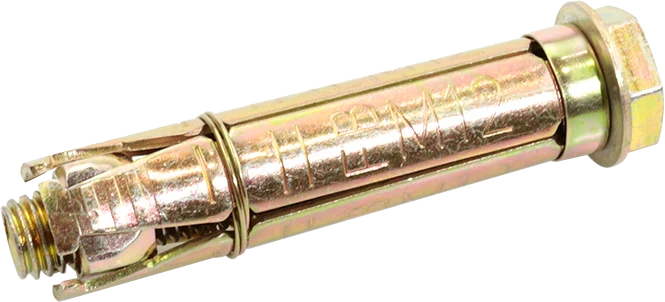
For anchor products, the intended application should also guide the required specifications and supporting evidence. Supply chain coordination creates more ways to organise production, but it cannot replace product verification. Connecting purchasing requirements, production records and acceptance criteria supports a more durable working relationship.
AOJIA’s Participation in Quality Management Training
A Handan Municipal Government report republished by China Fastener Info states that a quality management system training event for Yongnian’s fastener industry took place at Yongyang International Hotel on 20 March 2026. Handan AOJIA was among more than 40 participating companies.
For manufacturers, learning and cooperation ultimately need to serve customer requirements: accurate specification communication, effective process control and clear delivery information. The opportunities created by cluster development should translate through these practical steps into a more dependable purchasing experience.